The moral reckoning at the heart of the mathematics debate
Written By A/Prof Khoa Cao
01.10.2026
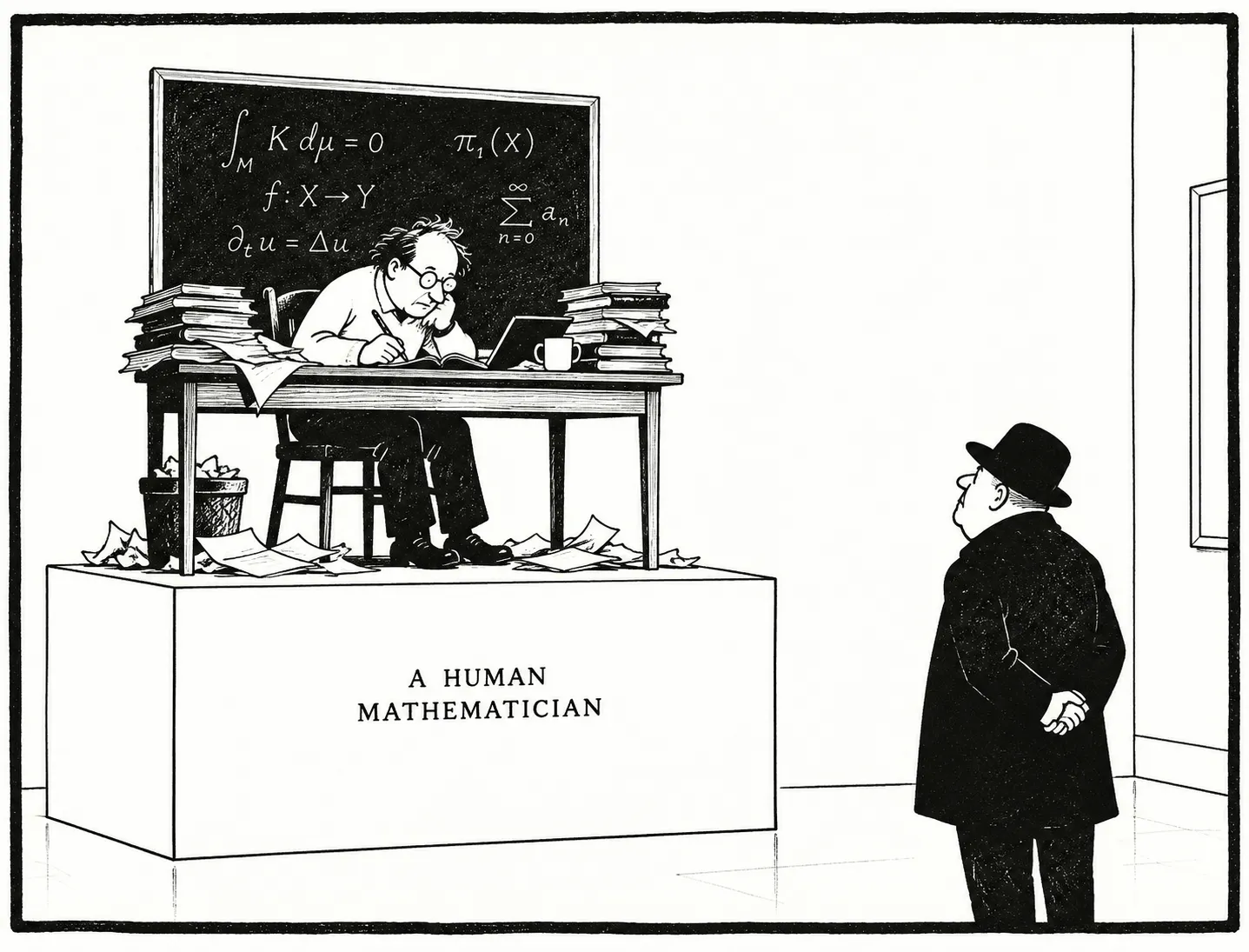
On September 11th, 2026, Terence Tao and 24 other Fields Medallists posted a declaration arguing a “severe misalignment” between the fields of AI and mathematics.
This declaration was intriguing because it represented one of the first intellectual disciplines to mount an organized dissent against AI, and this response felt somewhat paradoxical.
If OpenAI or Anthropic announced that they had found a cure for cancer or Alzheimer’s disease, it seems unlikely (and potentially unethical) that the Nobel Laureates for Medicine would declare a “severe misalignment” between AI and medicine under the same arguments.
Similar tensions are easy to imagine in engineering, law, science, education or other professions once AI begins producing a profession’s most valued outputs better than humans can.
The Moral Reckoning
Mathematics is facing a moral reckoning that many professions will soon confront:
Is mathematics more of a science or an art? More generally, is the value of a profession in its outputs, or in the human activity itself?
If the answer is a science, the value of the field lies with the discoveries, and this should be prioritised above the preservation of human understanding and insight.
If the answer is an art, the value of the field lies with the human process, and this should be prioritised above the potential societal benefits of expedited discoveries.
It will be interesting to see how this discussion will unfold.
While some professions may anchor on their overarching moral goal (e.g. the attainment of human health), others may anchor to a desire for dignity and recognition (à la manufacturing jobs in the US), while others yet towards profit and rent-seeking (à la NYC taxi medallion owners). Perhaps it may be rent-seeking dressed as a moral goal (e.g. humans always need to be in the loop).
Societal structures will also play a critical role. If the funding of mathematics is primarily through Government-based research grants, it would not be unreasonable for society to demand mathematics as a science rather than as an art. If the use of AI is banned (for example, emerging laws against self-driving cars), then the human process might be irrationally preserved despite the existence of significantly safer technology.
One of the most powerful forces that perhaps we can rely on is the market. Uber and Lyft managed to break the monopoly of NYC taxi medallions by simply offering riders a more affordable and convenient experience. Wall Street banks are pushing lawyers to cut their exorbitant fees because AI is cheaper, faster and more accurate. Doctors aren’t immune either; patients are increasingly researching and ordering blood tests directly rather than going through their physician.
A moral reckoning is on the horizon for almost every profession and it is worth reflecting on. What do you believe about your own profession?